Apr 8, 2026 · 7 min read
The 6 Allergies Every First Responder Needs to Know About
Penicillin and Antibiotic Allergies
Penicillin allergy is the most commonly reported drug allergy in the world, affecting around 10% of the population. Studies show that up to 90% of people who report penicillin allergy are not actually allergic — they had a reaction to something else or the allergy has faded.
Despite this, the label matters in emergencies. A doctor who sees "penicillin allergy" on a patient's record will switch to an alternative antibiotic, avoiding potential anaphylaxis.
NSAIDs — Aspirin and Ibuprofen
Non-steroidal anti-inflammatory drugs like aspirin and ibuprofen are among the first medications given to accident victims for pain and inflammation. For people with NSAID hypersensitivity, this can trigger severe bronchospasm or anaphylaxis.
This allergy is particularly common in patients who also have asthma. Noting it on your emergency card can prevent a well-meaning first responder from making things significantly worse.
Latex Allergy
Most people do not know they have a latex allergy until they are in a medical setting surrounded by latex gloves, catheters, and oxygen masks. Latex allergy can range from contact dermatitis to severe anaphylaxis.
Hospitals and ambulance services are increasingly latex-free, but the transition is incomplete. Informing responders of a latex allergy ensures they switch to nitrile gloves and latex-free equipment.
Iodine and Contrast Dye
CT scans, angiographies, and certain wound dressings use iodine-based compounds. Patients with iodine allergies can have serious reactions to contrast dye used in imaging — a major issue when imaging is urgently needed to diagnose internal bleeding.
Radiologists need to know before injecting contrast. This information directly affects the speed and safety of diagnosis.
Sulfa Drugs
Sulfonamide antibiotics (sulfa drugs) are sometimes used as alternatives to penicillin in accident trauma settings. They carry their own allergy risk — roughly 3% of people have sulfa drug hypersensitivity. Noting both penicillin and sulfa allergies together is important for clear antibiotic decision-making.
Anaesthetic Agents
Anaesthetic allergies are rare but serious — affecting about 1 in 10,000 anaesthetic administrations. The most common culprits are neuromuscular blocking agents, particularly succinylcholine and rocuronium. If you have had a previous adverse reaction to anaesthesia, document it specifically.
How to Communicate Allergies in an Emergency
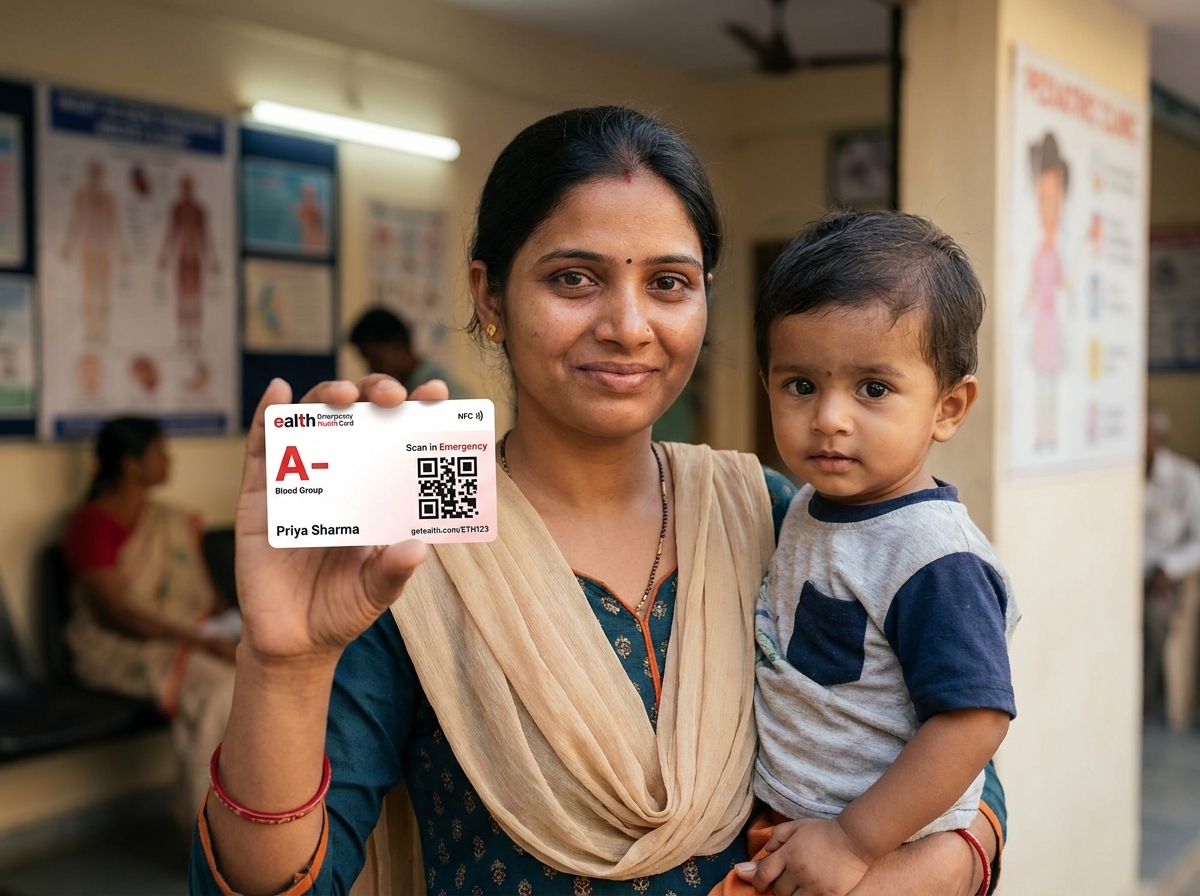
The simplest and most reliable method is an Ealth Emergency Health Card. Your allergy list is stored digitally and readable via QR or NFC by any bystander or paramedic within seconds. The physical card also has space for the most critical allergy to be laser-engraved.
Alternatively, medical alert bracelets remain a solid backup. The key is to never leave it to someone to search your bag or contact your family while you are unconscious.
Be prepared
Get your Ealth Emergency Health Card
QR + NFC. Blood group laser-engraved. Emergency info accessible to any bystander in under 2 seconds.
Buy your card — ₹499/year